
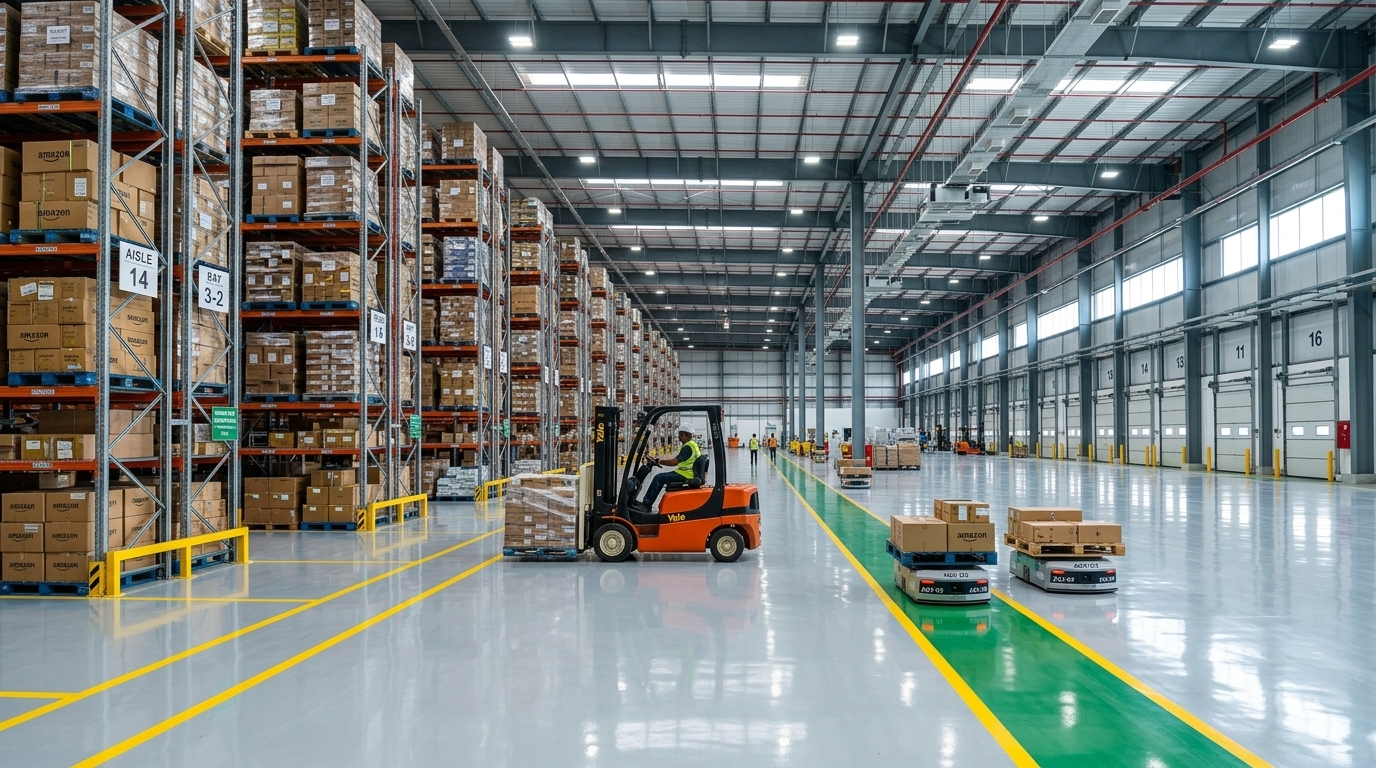
A warehouse floor takes a different kind of punishment than a production floor — constant forklift and pallet-truck traffic, point loads from racking, and long operating hours with little tolerance for downtime. Standard concrete wears fast under this load, and once dusting or pitting starts, it only gets worse.
Chemcoats installs heavy-duty epoxy and PU flooring systems for warehousing and logistics facilities across Chennai, specified for sustained wheel traffic rather than light industrial use.
Common Flooring Challenges in Warehousing & Logistics
- Concrete dusting and pitting under sustained forklift and pallet-truck traffic.
- Point-load stress from racking systems concentrated on small floor areas.
- Line-marking and zoning that needs to stay legible under heavy wear.
- Expansion joints failing and catching forklift wheels if left untreated.
- Limited windows for floor works in facilities running near-continuous operations.
Recommended Flooring Solutions
Heavy Duty Epoxy Flooring
System SpecHigh-build epoxy systems engineered for sustained forklift, pallet-truck, and heavy trolley traffic in warehousing and distribution environments.
Polyurethane (PU) Flooring
System SpecA flexible, impact- and chemical-resistant option for warehouses handling fuel, oil, or chemical storage alongside general goods.
Self-Levelling Epoxy Flooring
System SpecA smooth, seamless finish that reduces wheel vibration and equipment wear on racking and automated handling systems.
Expansion Joints
System SpecSealed and reinforced expansion joints so they move with the slab instead of cracking, chipping, or catching forklift wheels.
Related Case Studies & Projects
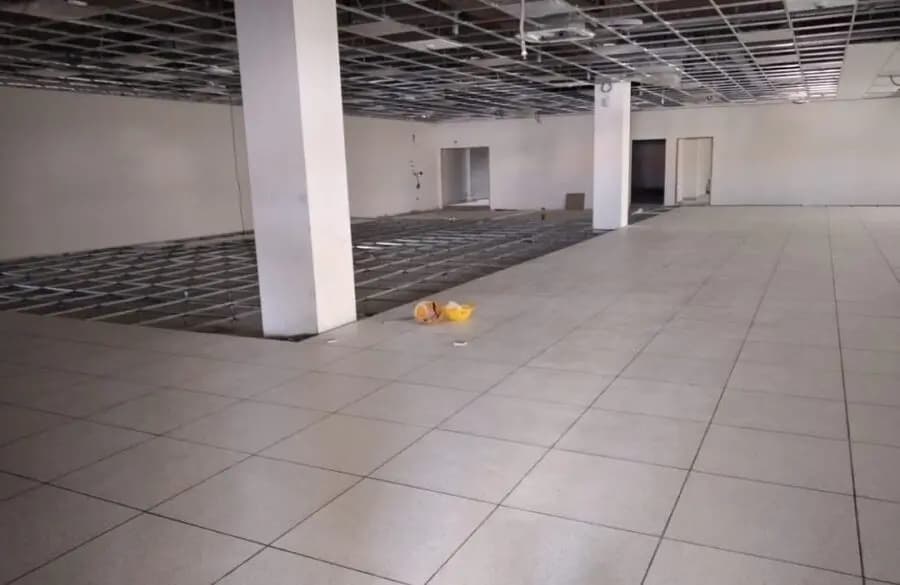 CASE STUDY
Luxshare Precision Warehousing & Logistics Floor
Read Full Project Story →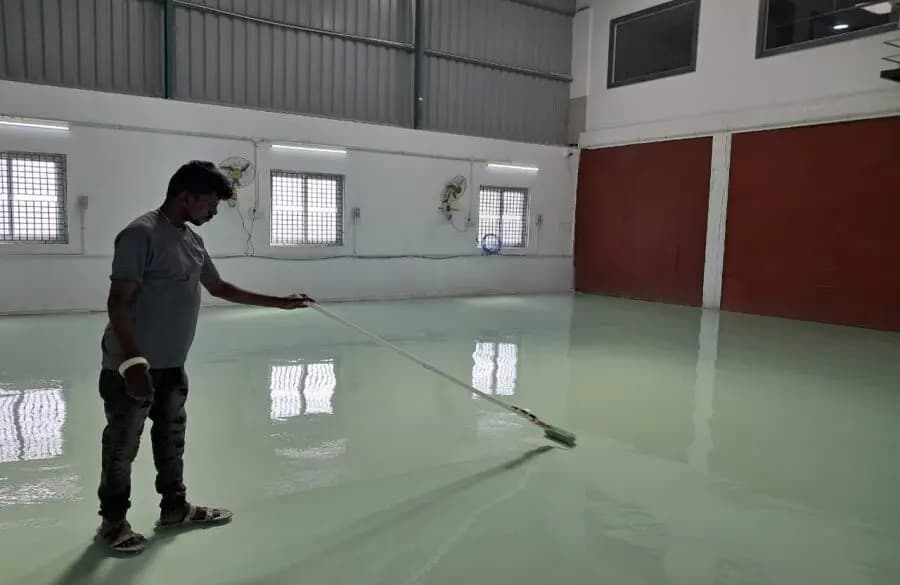 CASE STUDY
AADHI Tape Solutions — Warehouse Flooring
Read Full Project Story →Frequently Asked Questions
Find answers to common questions regarding flooring specifications, maintenance, and installation for Warehousing & Logistics.
What flooring is best for constant forklift traffic?+
Heavy-duty epoxy or polyurethane systems, applied at the thickness and hardness grade matched to your traffic volume and vehicle weight. This is confirmed during the site assessment rather than a fixed default — a facility running 24/7 with electric forklifts needs a different spec than one with occasional pallet-truck movement.
Can warehouse flooring be installed without stopping operations?+
Yes. We sequence installation by aisle or zone so parts of the warehouse remain operational while work is completed in others, and schedule around your peak dispatch periods where possible.
How long does warehouse epoxy flooring last?+
With correct surface preparation and a system matched to your traffic levels, heavy-duty epoxy flooring typically performs for 8-10+ years before recoating, though point-load areas under racking may need earlier attention.
Do you handle line-marking as part of warehouse flooring installation?+
Yes, aisle marking, safety zones, and racking bay lines can be incorporated into the flooring system so they stay legible under wear rather than fading like surface-applied paint.
Need Expert Flooring Guidance for Your Facility?
Dusting concrete and worn line-marking are early signs of a floor that won't hold up much longer under warehouse traffic. Request a free site visit and we'll assess your load and traffic profile before recommending a system.