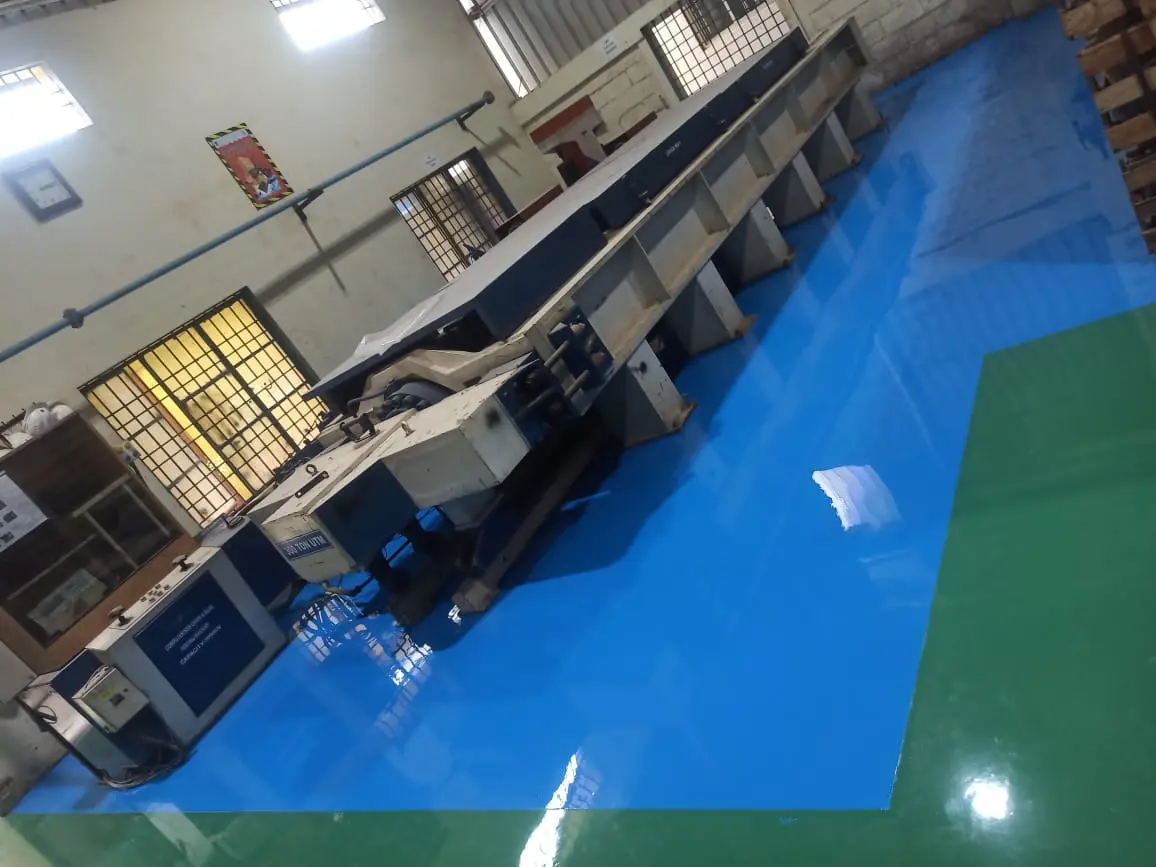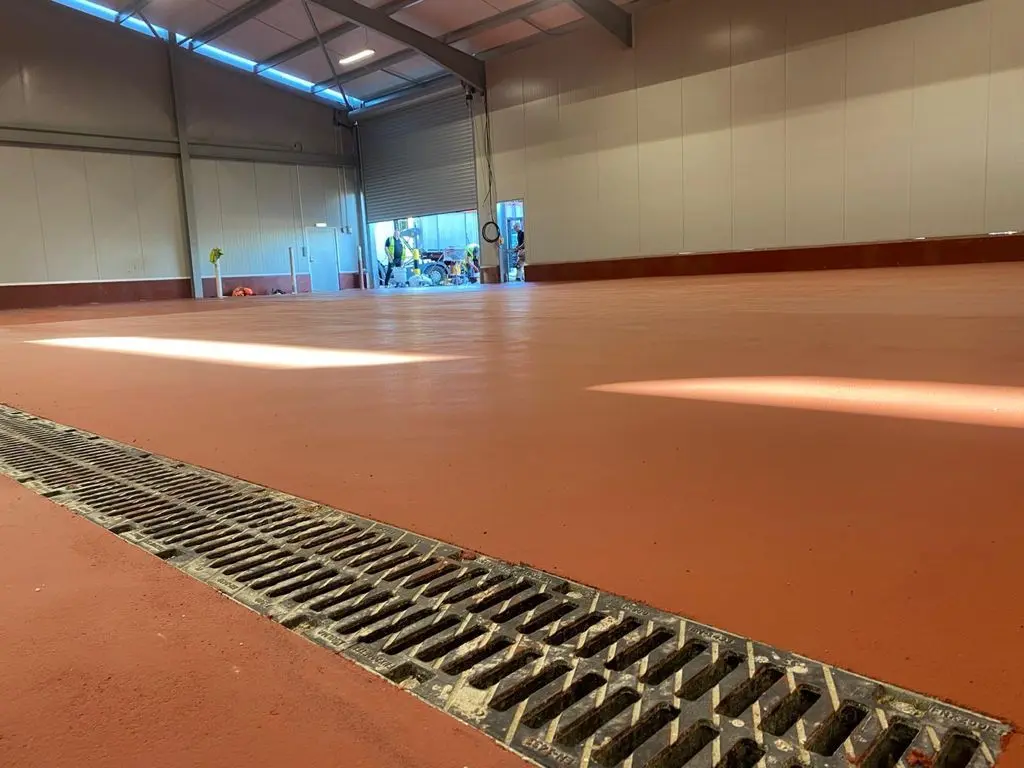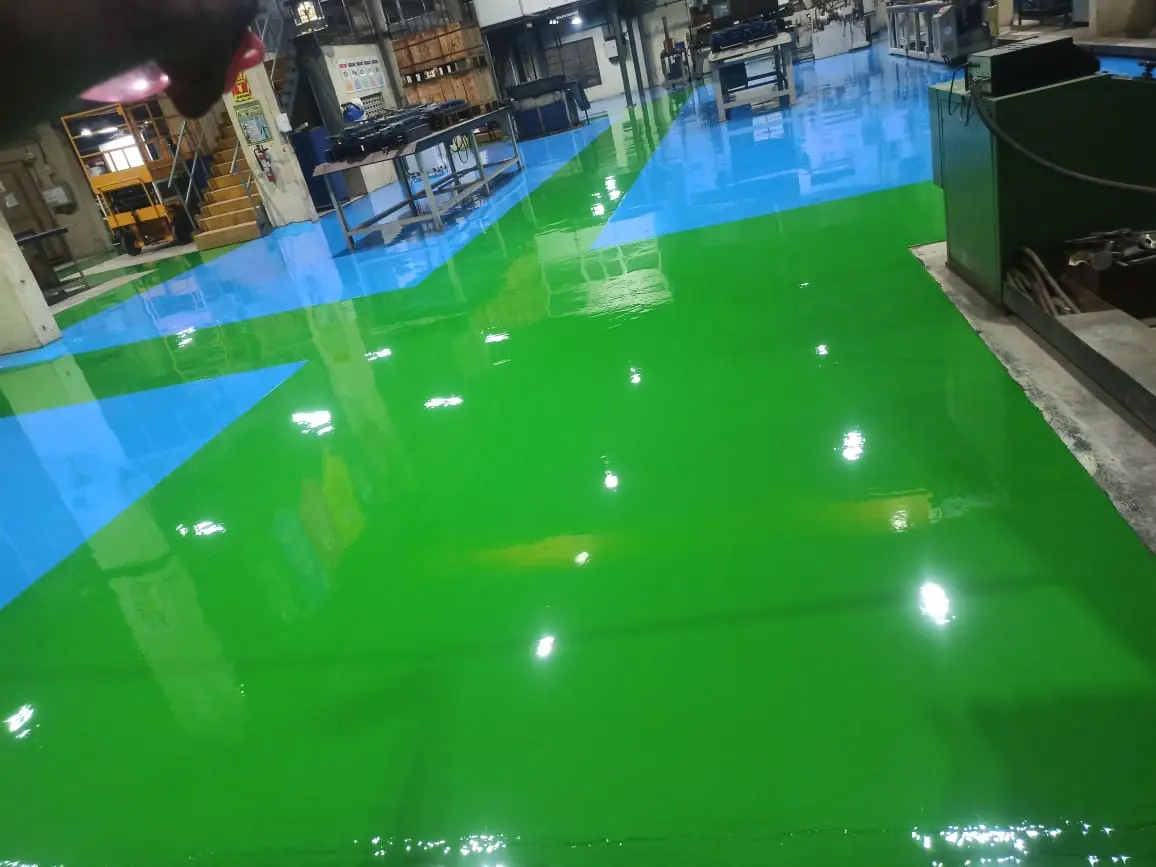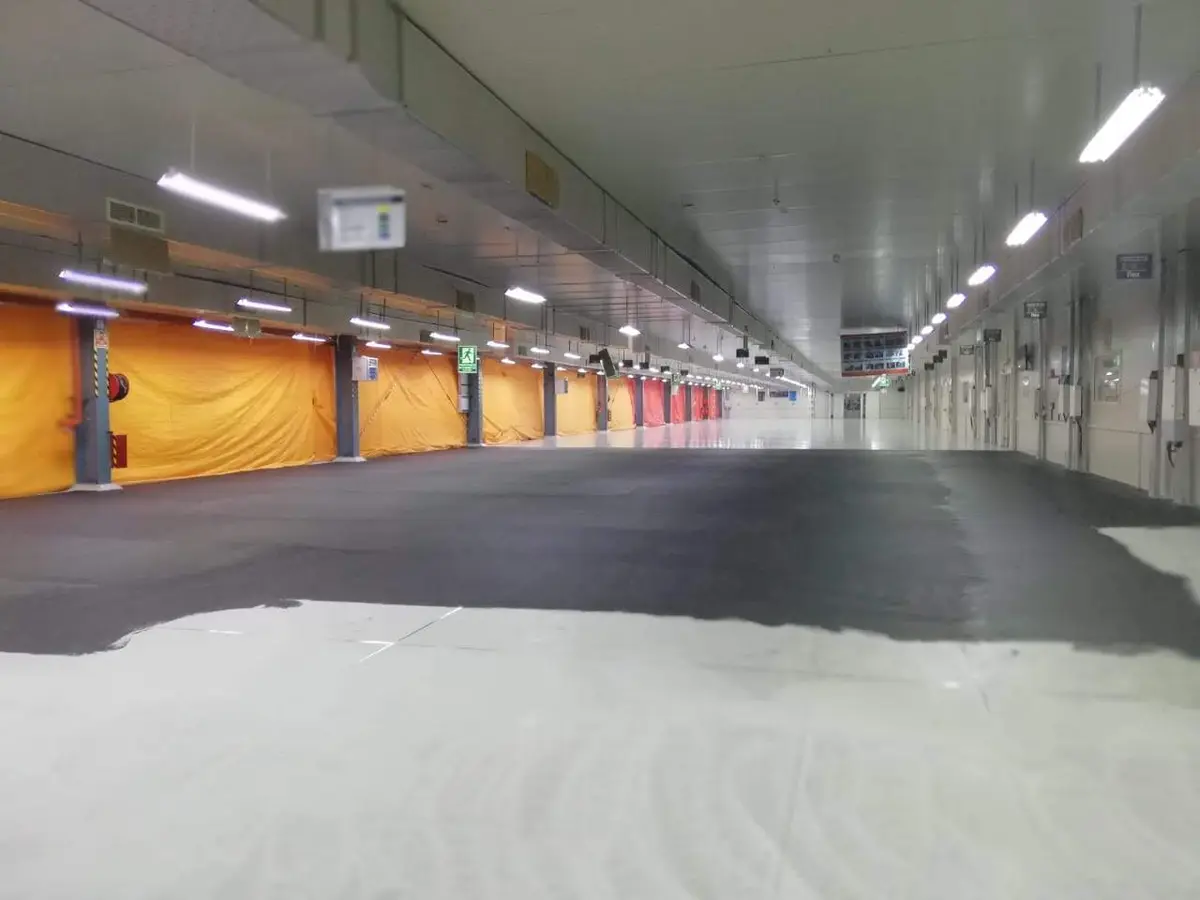
EPOXY FLOORING IN CHENNAI
Epoxy flooring is a high durable flooring system with remarkable properties, such as chemical resistance, seamless and easy to clean surface, and its capability to bond effectively on different substrates, which therefore makes it a versatile and long-lasting option for industrial and commercial applications.
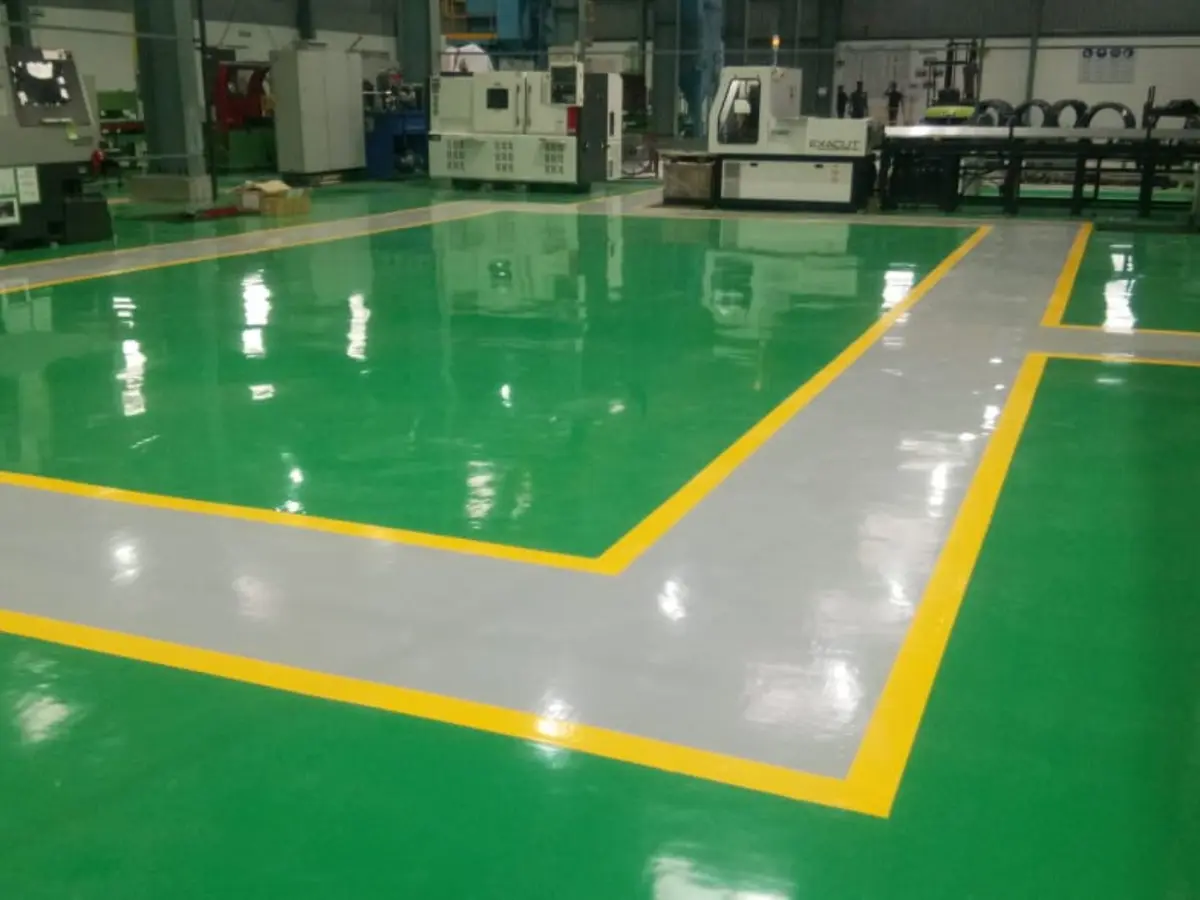
Epoxy flooring is highly valued in the industrial and commercial sectors for its excellent mechanical properties and excellent dimensional stability. When properly cured, epoxy flooring has excellent chemical and heat resistance, which makes it a popular choice for many applications. Its low shrinkage also adds to its durability, making epoxy flooring a reliable and long-lasting solution.
Why Epoxy Flooring for Chennai industries?
Epoxy flooring plays a vital role in the industry for several compelling reasons :
TYPES OF EPOXY COMPOSITON
- Bisphenol A
- Bisphenol F
- Novolac
The most popular form of epoxy resin that is used for epoxy coatings is Bisphenol A. Bisphenol A has a honey-liquid consistency and is an extremely versatile resin. Bisphenol A is available in many molecular weights. Their variety of molecular weights is what makes Bisphenol A especially versatile for the epoxy application. Bisphenol A is most widely used for flooring systems, in addition to solid coatings. Bisphenol A epoxy resin is the most common type for concrete coatings because of its excellent adhesion, toughness, abrasion resistance, and chemical resistance. Due to its especially thick natural consistency, there will commonly be additives and diluents which are added into the Bisphenol-A epoxy formula to enhance workability and adhesion. These additives lessen crosslink density which lowers the chemical resistance.
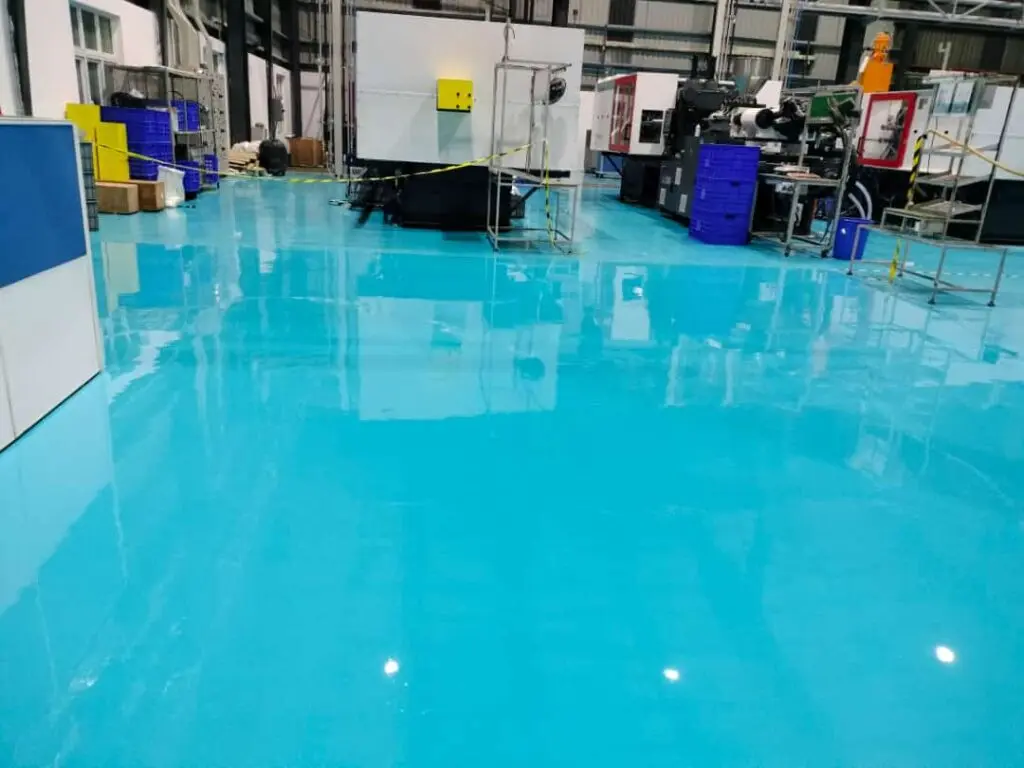
Bisphenol F epoxy will typically be more expensive than Bisphenol A epoxy. This is because Bisphenol F epoxy is able to be used for a greater variety of applications. Bisphenol F resins have lower viscosity which means fewer additives and diluents are added which translates to higher chemical resistance. Bisphenol F is especially chemically resistant, and are more likely to be used as varnishes or lacquers, and for application regarding water pipes, adhesives, supermarket food packaging, plastics, dental sealants, and liners. Another advantage is that Bisphenol F has less tendency to crystallize at lower temperatures compared to Bisphenol A resins. Bisphenol F can be blended with Bisphenol A and other resins to reduce viscosity and increase resistance to crystallization.
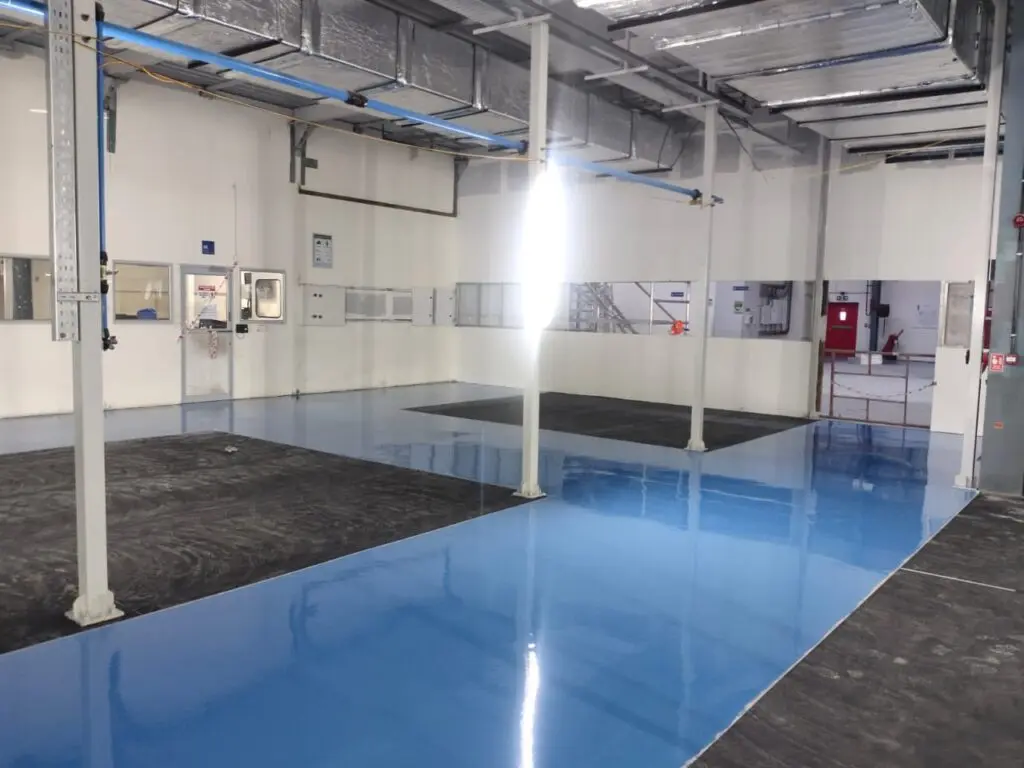
Novolacs are made using excess phenol and modifying Bisphenol F Resins. The viscosity of Novolac resins is higher than Bisphenol F and its functionality is considerably greater than both Bisphenol A and Bisphenol F resins. The higher viscosity and greater functionality of Novolacs give them superior heat and chemical resistance than their Bisphenol A and Bisphenol F counterparts. The greater chemical resistant qualities is a result of the very tight crosslink density because of Novolac’s higher functionality. These properties also make Novolac resins more brittle than Both Bisphenol A and F resins so formulators need to address that with additives and hardener selection. The greater heat resistance is the result of the larger number of aromatic rings. As to be expected Novolac resins have a higher cost to go along with their higher performance.
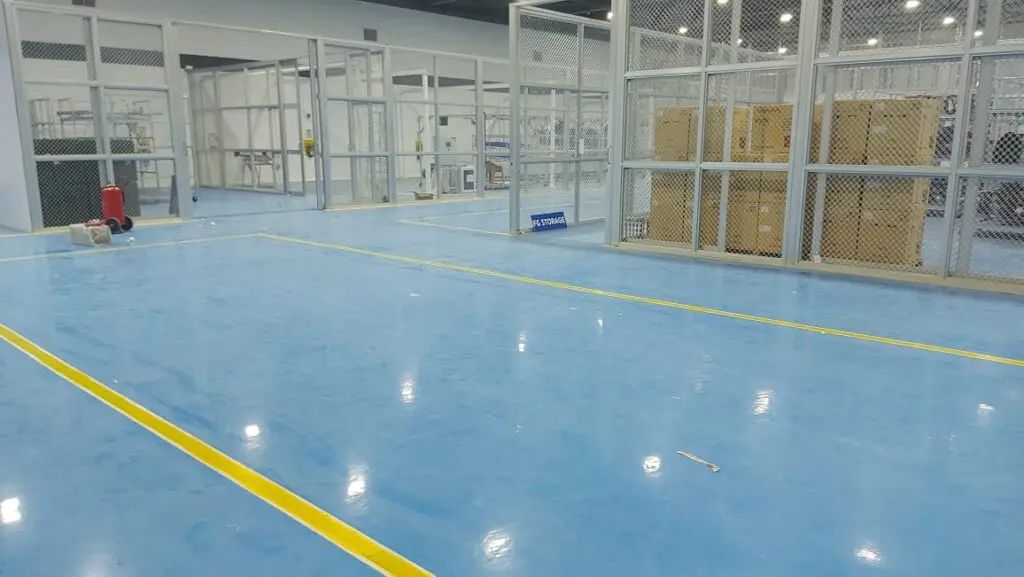
Epoxy Flooring Images